January 29 2017

Through Dangers Untold, and Hardships Unnumbered …

ETL507 Reflective Portfolio – Introduction
The submission of this reflective portfolio, completed as per the requirements of the capstone subject of the Masters in Education (Teacher Librarianship), is in many ways symbolic of the journey I’ve undertaken over the past three years, through a labyrinth of information and ideas. It represents the castle at the centre of the maze – for so long, the almost mythical focus of my studies, and now, I’m here, reflecting on the twists and turns behind me, and realising just how much of a journey still lays before me.

But I’m getting ahead of myself. Every good journey metaphor needs an origin story, right? I had been working at Evans High School for almost 7 years. I taught English and HSIE, was a year advisor for the class of 2013 from their transition year right through until their graduation, and was heavily involved in a variety of initiatives throughout that time, including the Welfare and Student Support teams, the Technology team, and a wonderful role as the School Promotions officer. I still loved my school, so I didn’t necessarily want to look at positions elsewhere. But I needed something different to focus on now my babies had flown the coop.

Cue the after-dinner phone call. When I heard who was speaking, I thought something was wrong – the Deputy Principal on the line wasn’t someone I had ever conversed with outside of school. But in reality, it was the lifeline I needed, the offer of a year of working in our school library to “see if we can make it a better place to be”.

I ummed and ahhed, very briefly, before I jumped at the chance. Whilst I have always loved libraries, and they played a pivotal role in my own growth as a child, a teenager, a uni student, and an adult, I have to admit that I had not spent much time in the library at the school I’d been working for 7 years. I’d visit when I needed to use one of the computer labs, or when I was working with the STLA and needed a bigger space to do reading groups with a class, but apart from that I avoided it. In the lead-up to this fateful phone call, I’d been working in the library, sorting through the school archives to organize materials for the 40th anniversary of the school, and whilst I was tucked away downstairs in a corner, I’d had opportunity to observe the ways in which the library was being used, and it made me incredibly sad. There was little engagement with the fiction collection, and less with the non-fiction shelves. When classes came in, it was purely to use computer labs, or to work in a space with air conditioning – they could have been operating in a vacant building for all the impact the library had on their teaching and learning. And at recess and lunchtime, students gravitated to the library for the power point they needed to charge their phones, or because it was too hot outside. Fights were frequent, and staff on playground duty in the library frequently complained about the behaviour management issues they needed to deal with – it was Battleground Library, and it made my library-loving heart immeasurably sad, so see a library with no soul, no life, no character.

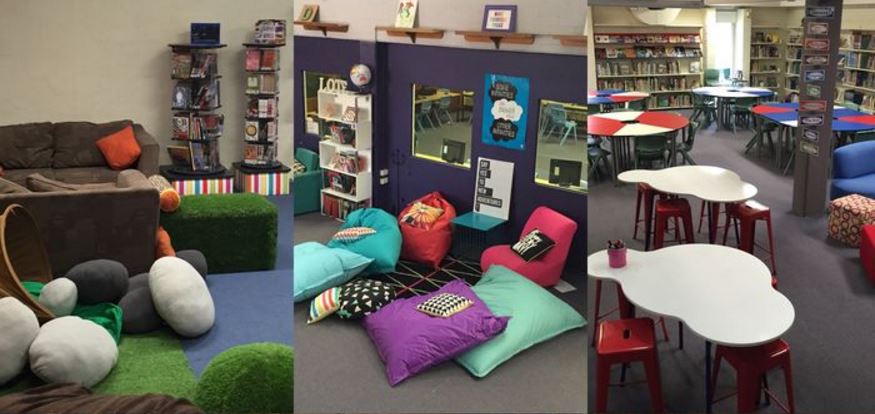
The more I thought about the opportunity to work in the library for a year, the more excited I became, and my mind was teeming with ideas. Term 1 2014 saw me arrive in the library with nervous excitement, and whilst we made some great changes to the space early on which improved the culture of the library enormously, the biggest change was to my own perception of exactly what the role of a Teacher Librarian was. I spent much of the first term – indeed, the first year – feeling extremely overwhelmed, and out of my depth, and at some point throughout that term decided that I really needed to figure out what in the hell I was supposed to be doing in this wonderful, challenging, exciting role. So, I applied to complete my Masters in Teacher Librarianship, not even sure if my tenure in the library would continue past the current year, but knowing that this was what I was meant to be doing with my life. I’ve learned far more than I could have anticipated, and as I face the end of this learning it’s a challenging task to try and sum up the difference this course has made to my views on the role of the Teacher Librarian concisely!

This portfolio consists of a number of posts related to some of the major learning elements I’ve undertaken over the past two and a half years. They are linked below, and if you click on the link for the first one, you’ll find options to bring you back here, or to take you to the next post. Enjoy the journey!

Where to from here?

Introduction (you are here)

Part 1 – The Role of the Teacher Librarian

Part 2 – ICT and the Library

Part 3 – Literacy and Literature

Part 4 – Conclusion and References

 

January 28 2017

What’s a TL do anyway?

ETL507 Reflective Portfolio Part 1 – The Role of the Teacher Librarian

Action figure librarian, by Jan Eliot (http://librarycartoons.wordpress.com)

As I’ve worked my way through my Masters and come to grips with what it is I’m actually supposed to do in this weird and wonderful role, I’ve been hugely influenced by some significant figures in library land. Karen Bonanno’s reflections on the importance of advocating for the role of TL and its importance in relation to colleagues was a significant realization for me – I’m not just doing my job, I’m representing the importance of my profession in my school (Bonanno, 2011). The critical role of TL’s as the primary point of call for the 21st century learner, preparing students for the complexities of the 21st century information and learning landscape, is an idea that still resonates with me 2 years after I first discovered it (Khulthau, 2010, p17). Lamb’s powerful exhortation about my strength as a TL lying in my ability to partner with teachers sits strongly with me, as I recognize the profound impact that I can have on the curricular goals of the school, on student achievement, and on student engagement (Lamb, 2010). These ideas are all ones I strive to live up to, as I work my way into the role of TL and aim to honour that role at Evans High School.

ASLA 2011. Karen Bonanno, Keynote speaker: A profession at the tipping point: Time to change the game plan from CSU-SIS Learning Centre on Vimeo.

Sometimes I’m more conscious of how far I have to go in establishing the importance of the role of TL in our school and developing these essential connections between staff, than I am of how far we have come. There are still faculties with whom I’ve not done as much collaboration as I would like, and my goal in the coming year is to explore ways in which I can foster these connections and solidify my importance to them as an information resource and a teaching and learning partner. It was gratifying, then, when asking colleagues for some feedback as to how they see the role of Teacher Librarian in our school and the impact I have had in my time in the library to get some positive affirmations about how they saw my role and the successes I’ve had.

https://www.instagram.com/p/BJec4eRDH6f/?taken-by=evanslibrary

‘In her three years as teacher librarian, Tamara has reinvigorated the library, turning it into a vibrant learning hub at Evans HS. The reimagining of the fiction and non fiction collections have been tailored to student need, interest and the myriad of learning abilities and English language proficiency at EHS. Further, Tamara has worked with teaching and executive staff to deliver a vast array of new teaching and learning activities and experiences.’ DM, EHS Exec member.

Over the past three years, I have worked with numerous staff to look at the role of our library in the larger organism that is our school. I’ve also come to grips with my own role within the library, and within the wider context of our school, and the complex relationships that form our staffing and management structure. I hadn’t really considered that my role involved elements of leadership, however, and that, for me, was a challenging aspect of my Masters study to wrap my head around – partly because I’ve never aspired to leadership positions, and partly because I found it difficult to reconcile what I perceived my own personality type to be with the kinds of traits I considered needed to be possessed by those who were “leaders”. I was inspired through my study of ETL504 Teacher Librarian as leader, to reconsider my role as leader – to recognize that leadership isn’t a title, but a role you adopt (Rodgers, 2014). As a result, I’ve taken ownership of my role as teacher librarian, embraced the ways in which I can lead the school. Fishburne’s (n.d.) discussion of leader as editor resonated strongly with me – the notion of the teacher librarian as one who synthesises the ideas and input from individuals into a cohesive story. The success of this endeavor lies in the strength of connections to develop effective teams (Aguilar, n.d.), which has been a key indicator of the types of interactions I have worked hard to establish.

For example, after liaising with staff across all faculties, and establishing the need for greater academic rigor in regards to academic research and referencing, I developed a research and referencing handbook. This was presented to the executive for approval, introduced to staff as part of a professional development session, and implemented across the whole school through library lessons at the beginning of the year, and research lessons with classes as relevant faculty tasks arose. I worked with head teachers and faculties to establish individual subject area needs, and developed plans to meet these needs, with both research and resource development to support teaching and learning. I worked closely with the teacher of a yr7 HSIE class, who wasn’t confident in delivering research skills lessons to her students, and designed resources that supported her in this challenging task, as well as team teaching the lesson to assist her in developing her skills in this area.

https://www.instagram.com/p/BI9IrB6jjYX/?taken-by=evanslibrary

“Ms Rodgers had my Year 7 class in the library. She prepared work sheets and provided fantastic resources for the students to complete the research task. The students enjoyed the lesson and learnt quite a lot from it as we talked about it later and referred to the activity in other lessons as well. I learned a lot, too, and feel more confident about teaching research lessons in the future.” LM, EHS HSIE Teacher. 

I love my job, and I’m extraordinarily privileged to explore the many and varied opportunities my role affords me. I’m looking forward to continuing to develop my skills, as I work with the staff and students of Evans High School to create a library which we call be proud of.

Where to from here?

Back to the beginning – Introduction

Part 1 – The Role of the Teacher Librarian (you are here)

Part 2 – ICT and the Library

Part 3 – Literacy and Literature

Part 4 – Conclusion and References


January 27 2017

Computers and iPads and drones, oh my!

ETL507 Reflective Portfolio Part 2 – ICT in the Library

I’ve always enjoyed technology. From my primary school days when I would volunteer to help my teachers with the duplicating (oh that smell!), to my high school years when I would excitedly wait outside the maths staffroom at lunch time, pestering the head teacher to let me use his Commodore and type in pages and pages of code from a magazine in order to get a dodgy 8-bit game of Pacman or Space Invaders to operate, I’ve always been an early adopter. This has continued throughout my teaching career as I’ve been keen to experiment with and implement new technologies in my classroom. For example, during my time as an English teacher at Evans High School I developed a gaming program for a year 9 boys class, which focused on the narrative and character development through interactive games with multiple overlapping storylines. This required students to demonstrate an understanding of the structure of gaming, and to work with complex multimodal texts to analyse the effectiveness of a variety of gaming texts. See also our epic Angry Birds lesson as part of a creative writing task, which demonstrates my willingness to try new things with technology – and, in turn, reflects the important role that gaming can play in education. Jane McGonigal’s TED talk, “Gaming can make a better world”, reflects my belief in the importance of gaming and fun in learning (2010).

So, it was with this passion for technology as a means of engagement and collaboration that I approached our library technology plan. A previous principal had decided to convert significant amounts of the library floor space to establish 3 computer labs, which had been used for teaching and learning purposes during class time, with limited availability for students during breaks to complete study and homework. My studies, as well as my independent research about best practice in the modern school library, have provided me with enormous insight into the many and varied opportunities for technology integration and inclusion. ASLA and ALIA’s joint statement on school libraries and ICT provided some valuable guidance relating to the inclusion of technologies in the future school library (ASLA, 2016), whilst Holland advocates for a new paradigm of technology in the 21st century library, using emerging technologies to enhance the more traditional  aspects of the school library, rather than supplant them (Holland, 2015).

With this in mind, I worked closely with our technology team to examine the possibilities for expanding technology offerings in our library. Research into available technologies that would allow students to move away from a traditional “around the wall” configuration when working on computers gave us many options, and we purchased a combination of touch screen laptops, chromebooks, and iPads, which are managed through the library catalogue for individual loan by students, bookable through our SENTRAL system for class bookings by staff, and stored in a charge and sync trolley for ease of management.

Just providing the technology didn’t introduce massive changes, however. Initially, staff using the devices continued to do so in much the same way as they had in the computer lab – the devices and geography had changed, but the practice hadn’t. Around the same time as we had expanded our available technology to include these devices, I was studying Social Networking for Information Professionals (INF506), one of my Masters electives, and I came across The “Building Academic Library 2.0”  video, part of a symposium sponsored by Librarians Association of the University of California, Berkeley Division in 2007.

This was a thought-provoking session, and if you haven’t seen it I’d recommend making a cuppa and settling in for an hour. It helped provide me with some much needed context as I looked at moving our library more from the more static, traditional mindset, to a more a more dynamic engaging landscape for learning. I was inspired to consult with our school community in regards to what they wanted in regards to technology, and how they’d like to use it. (Rodgers, 2015) This led to us surveying both staff and students, and establishing an action plan for the use of these devices in our library. I worked with the technology team to implement “Tech Byte Tuesdays”, where staff can attend a quick half hour session on for some tech training that will support their use of technology in the classroom. I also worked closely with faculties to offer team teaching and training on the use of iPads with classes, for both independent and group tasks.

Feedback from staff has been wonderful as a result of these changes. I have been conscious of ensuring that my efforts have been accessible to all staff, and have been inclusive of the Intensive English Centre teachers and classes. The testimonials below from staff indicate the effectiveness of this change in technology use, and the role of the teacher librarian in effecting these changes, and I’m looking forward to continuing to ensure that staff feel supported in implementing new ways to incorporate technology into their classroom, to help meet their teaching and learning goals.

“Over the past year, I have used iPads and Chromebooks on a semi-regular basis in the library. The space has dramatically changed for the better and makes for a more positive learning environment. The students have really enjoyed setting up camp on bean-bags, couches and the steps to settle in for a technology lesson. Students have particularly embraced the use of the Chromebooks, engaging with Google Drive and Google Classroom. The library and the librarian have facilitated this learning. Our librarian is on-hand to guide students through newly implemented technologies and platforms around the school.” MK, IEC teacher.

“My year 9 kids enjoyed a library sponsored seminar on book trailers given by visiting  authors. When they were working on their own book trailer they chose to  set the ‘book’ in the library…good access to technology and support in an interesting  space made this their natural choice for zombie apocalypse fantasies…and they knew the librarian would be totally accommodating -even if it meant playing a part.” JM, EHS English teacher.

I’m gratified that my passion for technology, my consultation with our technology team, and my collaboration with teaching staff is having an impact on teaching and learning, and supporting a stronger culture of engagement in our wonderful library space.

A common trend in libraries has been the implementation of the Makerspace, as indicated in recent Horizon reports (see, for example, the 2017 NMC Horizon project wiki: NMC, 2017), and by the increasing prevalence of makerspace zones in both school and public libraries (Slatter and Howard, 2013). The past 12 months have seen the development of the Makerspace@Evans, which has been guided by student interests via survey (http://bit.ly/EvansMakerspace), and in consultation with TAS staff, to support their curriculum needs for multimedia and ICT subjects. Encouraged by my collaboration with other teacher librarians I was studying with, I reached out to my professional network, and examined what was working at other schools, drawing much inspiration from the work being done at Sydney Secondary College in the development of their fantastic makerspace.

What is a Library Makerspace? from Sydney Secondary College Lecihhardt Campus

I worked with the HT TAS to apply for a grant for funding, and have worked with a student team to renovate a previously unused room in the library to house our Makerspace. Student engagement in the process of developing the makerspace was vital, from planning activities to designing the space itself, and everything in between (Legeros, 2016). Our makerspace is a diverse collection of opportunities to explore, create, and innovate. We have 4 wall-mounted TV’s with gaming consoles, lego, craft stations, raspberry pis, and a collection of robots, including ozobots, spheros, and lego robotics. It’s an evolving space, still in the early stages of implementation. We have trialled some coding lessons with selected year 9 and 10 TAS classes, and have run superhero paper circuits workshops as part of our primary school taster lessons programs, which were run by student tech warriors, who took ownership of the activity, and displayed confidence in delivering the workshop to both students and teachers.

The most successful of our Makerspace ventures thus far has been a series of sessions with our Autism Unit. In consultation with staff, I planned and delivered a series of lessons, providing students with the opportunity to engage with a range of technologies from our makerspace. These included an electronics workshop creating paper circuits, interactive gaming sessions providing opportunities for both collaborative and independent play, and coding and robotics sessions using programming apps and our Sphero SPRK robots and accessories. The benefit of these makerspace sessions was the flexibility and adaptability of the activities, a feature which is essential for a group of students with such diversity of skills, abilities and interests (Waters, 2014). It allowed students to engage with the activity at their own level, whilst providing opportunities for extension and challenge as appropriate.

https://www.instagram.com/p/BNslx0GB6Me/

Feedback from Autism Unit staff was overwhelmingly positive, as indicated by this podcast, recorded in an interview with Steve, one of the Autism unit teachers, and a close collaborator of mine in developing our makerspace programs.

As a result of the success of these initial sessions with students, we have planned more makerspace workshops in 2017, including an extended STEM program as part of a Multimedia unit, as well as more shorter independent sessions. 2017 will also see more collaboration with other teachers, particularly those in STEM subjects, to develop teaching and learning opportunities for students using our makerspace, and I will be working with students to develop opportunities for them to use the resources outside of their timetabled classes (eg lunchtime, before and after school). I’m looking forward to continuing to explore ways that I can work with staff and students to leverage the impact of technology in our library in order to improve student outcomes and engagement, and to support staff in their teaching and learning goals.


Where to from here?

Back to the beginning – Introduction

Part 1 – The Role of the Teacher Librarian

Part 2 – ICT and the Library (you are here)

Part 3 – Literacy and Literature

Part 4 – Conclusion and References
 

January 26 2017

It’s all about the books (and the reading … and the writing … )

ETL507 Reflective Portfolio Part 3 – Literacy and Literature

Charles Schultz, Published 1961, from https://librarycartoons.wordpress.com/2010/04/03/somethings-fishy-here/

Libraries have always been a place of refuge for me, a place where I found information, inspiration, and connection. One of my greatest desires in my time in the Library@Evans is to help create that kind of connection for my students and colleagues. I want our library to be a place that they instinctively go to when they need to know, think, feel, discover, wonder. This is a multifaceted goal, which requires both an improvement in the literacy skills of our students and an increased engagement with the resources we have available in our collection.
Evans has been implementing the Reading To Learn (R2L) program, across both the high school and IEC for the past three years. R2L has a strong focus on developing reading and literacy skills through the use of a structured program, focusing on age and stage appropriate texts, regardless of reading ability. I liaised regularly with faculties to ascertain the kinds of resources they needed to support their R2L lessons, and researched texts to ensure their suitability for both syllabus content and reading level. This coincided with the writing of our collection development policy, which our library had previously not had, and provided us with the opportunity to examine the non-fiction collection, and undertake an extensive and much-needed weeding project.

I had, mostly unconsciously, always considered that fiction and non-fiction were the two extremes in our collection – fiction was useful for English and for enjoyment, and non-fiction where you went if you were after knowledge, or resources to support the rest of the subjects on your timetable. One wasn’t better than the other, but they were inherently separate worlds.  ETL402 Literature Across the Curriculum challenged those assumptions for me, however (Rodgers, 2015). Pennington’s (2010) discussion about the use of science fiction as an engaging resource for science lessons impacted my perception of useful resources for various curriculum areas. My learning in this subject translated into increased opportunities for my students, as in my consultation with faculties about their subject needs, I deliberately sought out opportunities to provide literature resources for non-traditional literature topics (for example, the graphic novel Ancient History lesson referenced in my first post).

This also let to an investigation of other ways in which I could provide authentic learning opportunities for students, and led to the development of the “Experts of Evans” project. Our aim is to provide student access to people as resources – to engage with experts in their fields of study, rather than simply relying on information located in electronic and print resources.

https://www.instagram.com/p/BLX1Z6CFnzb/?taken-by=evanslibrary

“Year 9 students were working on an assessment on the impacts of bushfires on the Australian ecosystem. Ms Rodgers organised a guest speaker to give a talk on this topic in the library. Students not only gained insight into their assessment topic but were also very motivated by the inspirational speaker. They also received information on careers in science, which was an unexpected bonus of the session.” SA, EHS Science teacher

This has taught me to challenge my own assumptions about what we traditionally view as appropriate resources for subjects, and to explore ways to expand the connections between texts. My aim, then, is to provide students with a richer learning experience, as they develop greater skills in navigating an increasingly complex world of texts that surround them.

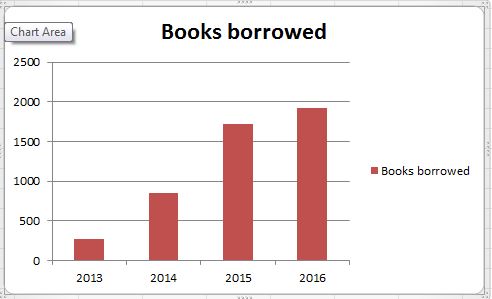
In order for students to improve their reading skills, and thus their engagement with all the wonderful gifts that a rich literary life can offer, we needed to look closely at our fiction collection. Extensive weeding and purchasing was carried out, and I greatly appreciated the lessons learnt during ETL503 Resourcing the Curriculum. Hughes-Hassall’s (2010) guidelines on collection development provided some much-needed guidance as we worked to create a collection that would meet the needs and interests of our students, and helped with the development of our collection management plan. Similarly, Olin’s discussion of the importance of weeding helped guide the decisions we made in regards to resources that had been on the shelves for years without being touched. Regular consultation with students, along with liaising with booksellers and reader advisory sites, helped us to create a more appealing fiction collection. This, combined with frequent promotion of the collection (for example, through our @evanslibrary Instagram account), led to a significant increase in borrowing. This table shows overall borrowing, which has had a consistent upward trend. In 2017, our aim is to further analyse engagement with the collection across the various section we have, to gain a greater understanding of borrowing patterns and needs.

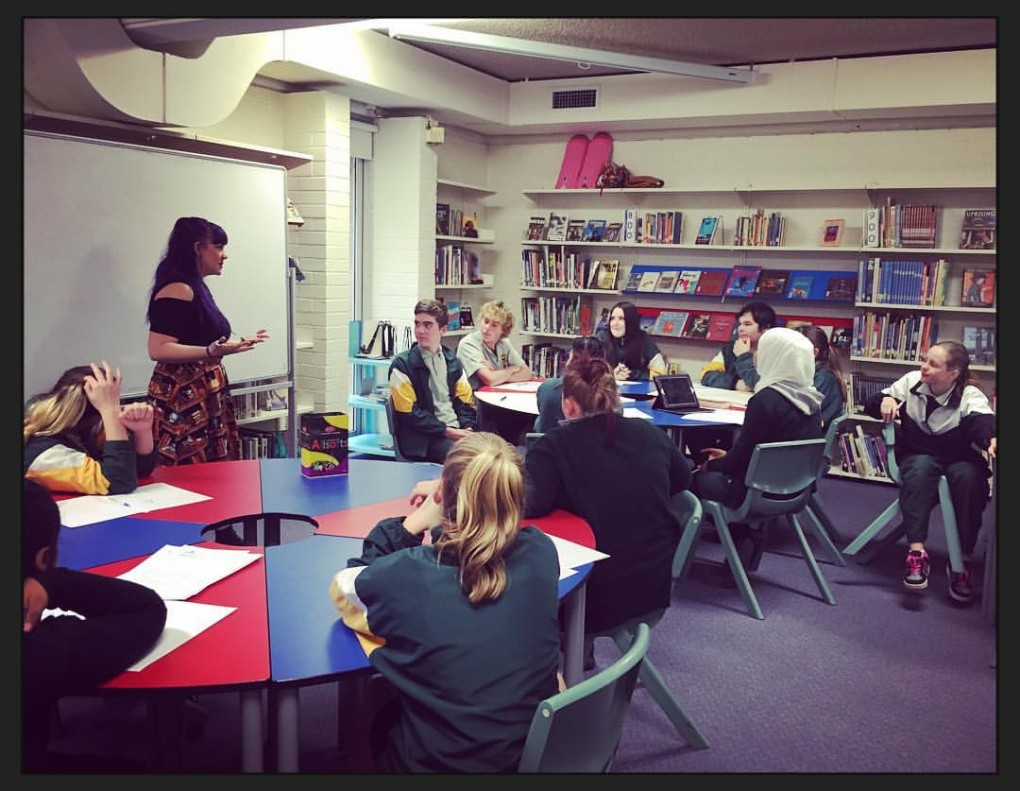
The increased enthusiasm shown by our school community for engaging with the wonderful worlds that surrounded them on the shelves has been evident, too, in the increased interest and involvement in library activities, such as writing workshops, author talks, and reading bootcamps. Over the 2016-2017 summer holidays, we ran an Evans Summer Reading Challenge, which required students to sign up, filling out a personal reading preference survey, and then take home a specially selected collection of books to read. You can read more about the whole challenge HERE. The success of this challenge is a key indicator of the increased engagement of both students and staff with the library, and the improving reading culture of our school.

When asked for feedback on our library, one staff member provided the following list of her thoughts, which I think encapsulates for me the successes we have accomplished in recent years.

“1- The setting in the library is more inviting.
2- Online system makes it easier to find books.
3- I got a lot of pleasure from reading more contemporary books and got introduced to new authors.
4- Workshops with authors really encouraged students to learn about the writing process and the importance of language.
5- You [the teacher librarian] always have time to help students and staff with book choices.
6- There is a larger section for graphic novels for students who prefer lighter reading.
7- layout makes access easier to required books”
MS, Evans IEC teacher

Where to from here?

Back to the beginning – Introduction

Part 1 – The Role of the Teacher Librarian

Part 2 – ICT and the Library

Part 3 – Literacy and Literature (you are here)

Part 4 – Conclusion and References


January 26 2017

Final thoughts?

ETL507 Reflective Portfolio Part 4 – Conclusion and References

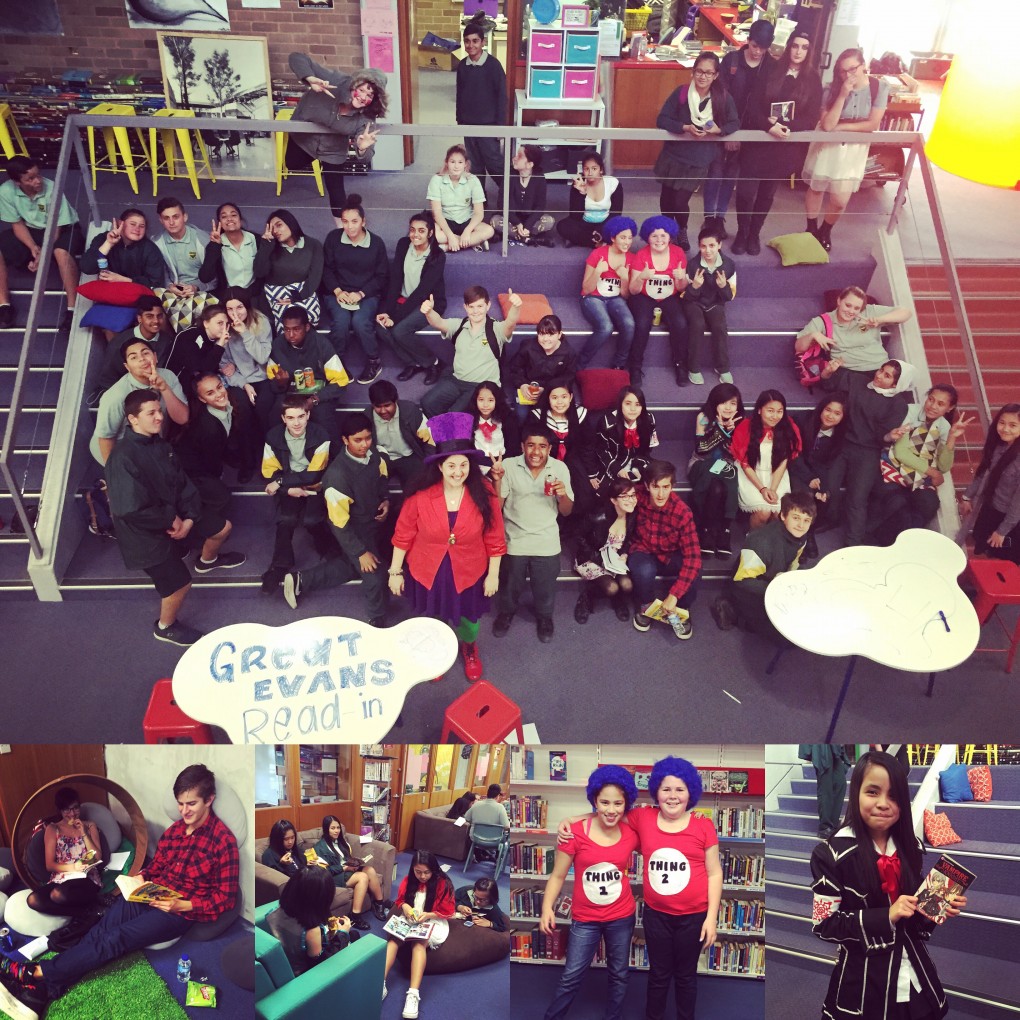
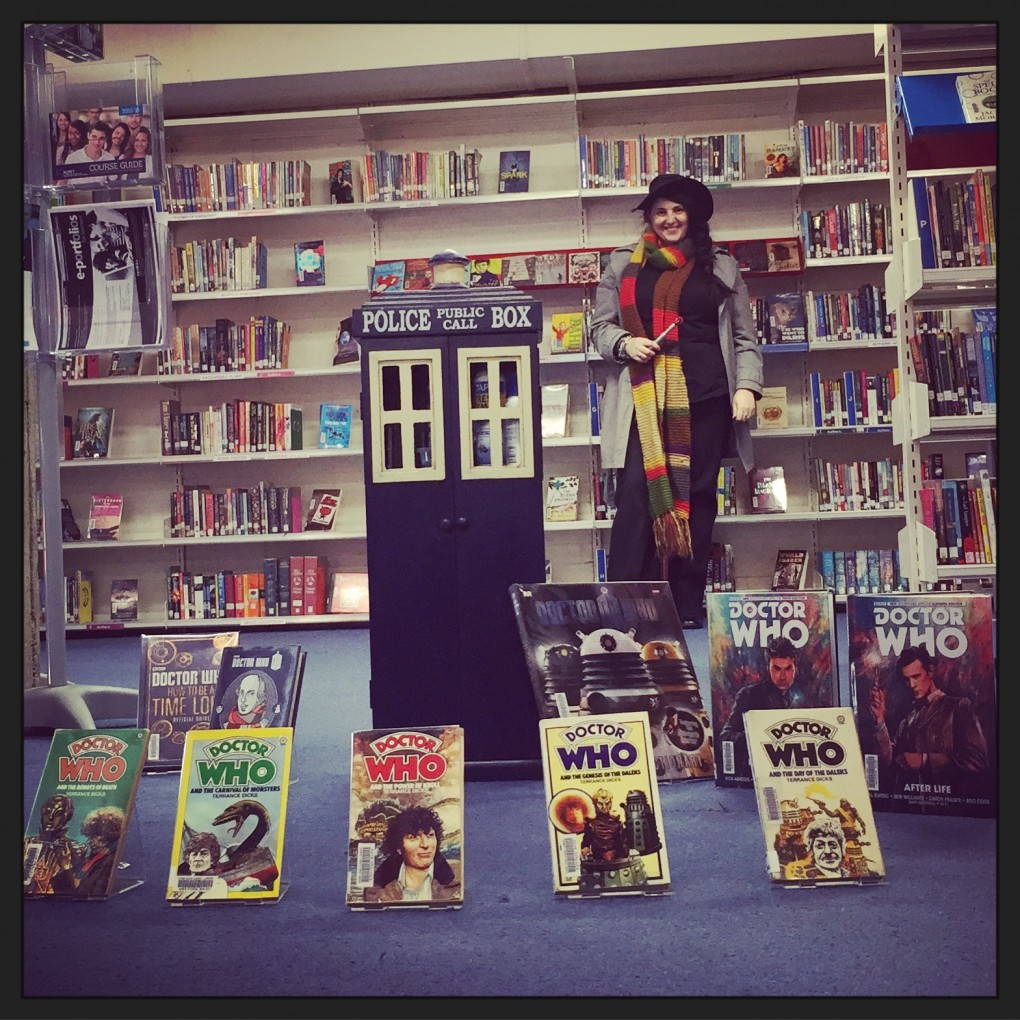
Somehow, despite the time that putting this portfolio has taken, and the breadth of learning experiences it covers, this feels like a somewhat superficial exploration of the impact that the Masters in Education (Teacher Librarianship) has had on my life, and how I view myself as a teacher librarian. There are so many other elements that could easily have taken up an entire post on their own – decisions about reclassifying collection material, for example, establishing a quick reads collection organised by genre rather than DDC in order to support our beginning readers from the IEC. The Library Warriors crew, and its impact on engagement within the library. The development of our social media strategy, which has been used as a model for social media interactions for libraries both in NSW and interstate, through my presentations at numerous conferences. Our increasingly awesome book week celebrations, from their origins with a single hour long read-in three years ago to the week long Festival of Stories in 2016.

I made mention previously of a few of the changes that have been noted by staff members, and which I’m counting as my “measures of success”, as we strive to ensure that the Library@Evans meets the needs of our whole school community: here are a couple more, which really resonate with me, as indicators that what I do makes a difference. These awesome successes, the ones that impact the students’ connection with the library and confidence in their own learning, are the ones of which I am most proud, and will strive to continue to develop.

My Intensive English Foundation classes were introduced to the library- the novels in their language, anime, easy reader books were pointed out to them. I’m sure this simple introduction has led to the increased number of IEC students borrowing books and becoming a Library Warriors that I have noticed over the past 3 years. Also, while on playground duty in the library, there has been a huge increase in the number of IEC students working/ meeting/ utilising the library’s facilities at lunchtime.” OT, IEC Teacher

“I have been at Evans for 20 years plus and have been greatly heartened by changes made to the library over the past couple  of years. It used to be the air conditioning that got kids into the library on hot or cold days, and patrons were thin on the ground  a lot of the time when the weather was kinder. Now kids go to hang out and to meet books and enjoy the space and read books and talk about  books. They use technology to work on their own stuff or assignments and make use of access to help and support. 

The library  is now owned by the students and if any new student wanders in, the actions of the library warriors  and the happy buzz etc  communicate quickly that this is a student friendly place. Evans kids are proud  of their library because they like to be associated with excellence and innovation and ‘cool’.

Apart from the great lessons taught to students by visiting authors  etc, the fact that they are being paid deep respect by people with  expertise who believe in their intelligence  and creativity is in itself a terrific encouragement to students. Kids get inspired but they also get confidence to take risks -which is huge when it comes to their own writing. 

The enthusiasm  for writing and for wide reading among my English students has grown, and I expect this to have an impact on their achievement  of outcomes. Attitudinal  change is no small part of this. The transformation of the library has had a significant impact on how lots of learners think about themselves and their school.” JM, EHS English teacher. 
See also this article in the SLANSW’s Journal LearningHub, in which the acting principal and I discussed the Library@Evans for the Great School Libraries Campaign. Oasisinthelibrary

As I reflect on the many, varied roles I undertake on a daily basis, I’m reminded of Valenza’s comment about teacher librarians and what we do, in that “there is no textbook for what effective practice looks like in continually morphing information and communication landscapes” (2010). In many ways, we make it up as we go along – with reference to our community of TL’s, certainly, and to the research and literature that surrounds us. But largely, my experience as TL is going to be different from any other, because it is determined by the unique connections that surround me, and the needs and interests of my school community. And that’s both exciting and terrifying.

I’m incredibly grateful to the wonderful community that have supported me on this learning journey, and who enable me to be the best teacher librarian I can be. The colleagues who have encouraged me, and provided me with much needed feedback about our progress in the library. The CSU academics who have given me advice and support as I struggled with some of the complexities of this course. The fellow students as part of our super-secret “TL’s in Training” group, who have commiserated, collaborated, and basically been legends throughout this whole process. And finally, the people in my life who have my back. Family, friends, loved ones – you know who you are. Your support, your encouragement, and your presence in my life is what made this crazy “yes I can do post-grad study while working full time, being a single parent, and thinking I can do it all” gig possible. And you rock. Thank you, thank you, thank you.

References

Aguilar, E. (n.d.). Effective teams: The key to transforming schools? K-12 Education & Learning Innovations with Proven Strategies that Work | Edutopia. Retrieved May 29, 2014, from http://www.edutopia.org/blog/teacher-teams-transform-schools-elena-aguilar

ASLA/ ALIA (2016). Joint statement on school libraries and information and communication technologies. http://www.asla.org.au/policy/school-libraries-ICT.aspx

Bonanno, K (2011) A profession at the tipping point: time to change the game plan. http://vimeo.com/31003940

Fishburne, T. (n.d.) 8 types of leader. http://tomfishburne.com/2011/10/8-types-of-leader.html

Holland, B. (2014) 21st Century Libraries: The Learning Commons. https://www.edutopia.org/blog/21st-century-libraries-learning-commons-beth-holland

Hughes-Hassell, S. & Mancall, J.  (2005).  Collection management for youth : responding to the needs of learners.  Chicago :  American Library Association

Kuhlthau, C. (2010) Guided Inquiry: School Libraries in the 21st Century. School Libraries Worldwide January 2010, Volume 16, Number 1, 17-28. Accessed from http://comminfo.rutgers.edu/~kuhlthau/docs/GI-School-Librarians-in-the-21-Century.pdf

Lamb, A. (2011). Bursting with potential: Mixing a media specialist’s palette. Techtrends: Linking Research & Practice To Improve Learning, 55(4), 27-36.

Legeros, L. (2016) 5 ways to partner with students in a makerspace. Innovation: Education; The Tarrant Institute for Innovative Education: engaging learners through technology http://tiie.w3.uvm.edu/blog/partner-with-students-in-a-makerspace/#.WI3Ec1N973h

McGonigal, J. (2010) Gaming can make a better world. TED Talkshttps://www.youtube.com/watch?v=dE1DuBesGYM

New Media Consortium. (2017) NMC Horizon Report: 2017 Library edition wiki: Makerspaces. http://library.wiki.nmc.org/Makerspaces

Olin, J. (2012). Letters to a young librarian: weeding is where it’s at: deacquisitioning in a small, academic library. Available at: http://letterstoayounglibrarian.blogspot.com.au/2012/01/weeding-is-where-its-at.html

Pennington, L (2010). Intergalactic Interdisciplinary Curriculum: Our place in the universe. New Horizons, Spring 2010. http://education.jhu.edu/PD/newhorizons/Journals/spring2010/intergalacticinterdisciplinarycurriculum/

Rodgers, T. (2014). ETL504 Teacher Librarian as Leader blog posts. https://www.tamarareads.com/category/etl504/

Rodgers, T. (2015a) Building Academic Library 2.0: Advice for Evans. https://www.tamarareads.com/2015/05/02/buildinglibrary20/

Rodgers, T. (2015b) Model collection policy reflections https://www.tamarareads.com/2016/07/22/model-collection-policy-reflections/

Rodgers, T, and Sarris, B. (2016) Oasis in the library. LearningHub: The journal of the School Library Association of NSW. Volume 2, Autumn 2016, p22.

Slatter, D, and Howard, Z. (2013) A place to make, hack, and learn: Makerspaces in Australian public libraries. The Australian Library Journal Vol. 62 , Iss. 4,2013. http://www.tandfonline.com/doi/full/10.1080/00049670.2013.853335?scroll=top&needAccess=true 

UC Berkeley (2007) Building academic library 2.0. https://www.youtube.com/watch?v=q_uOKFhoznI

Valenza, J. (2010). A revised manifesto. http://blogs.slj.com/neverendingsearch/2010/12/03/a-revised-manifesto/

Waters, P. (2014) Makerspaces for students with special needs. Edutopia. https://www.edutopia.org/blog/makerspaces-students-with-special-needs-patrick-waters


Where to from here?

Back to the beginning – Introduction

Part 1 – The Role of the Teacher Librarian

Part 2 – ICT and the Library

Part 3 – Literacy and Literature

Part 4 – Conclusion and References (you are here)